
USC Graduate Student Housing: What's Different About Off-Campus Living as a Grad Student
Quick Answer: Graduate student housing near USC differs from undergraduate housing in several important ways: grad students often search alone, arrive on compressed timelines, and need flexibility around lease start dates and roommate matching. Off-campus apartments within the USC DPS patrol zone that offer private studios or individual-bedroom leases in furnished buildings address all of these concerns in one decision.
If you're starting a graduate program at USC, the housing conversation looks different from what your undergrad friends went through. You may be arriving from another city or another country. You might not have a roommate lined up.
The good news: off-campus housing near USC is genuinely well-served, and if you know what to look for, the process is more straightforward than it seems. This guide covers everything specific to your situation as a grad student: timing, lease structure, location priorities, and the questions most people forget to ask before signing.
Why the Grad Housing Search Is a Different Experience
USC Graduate Admission confirms more than 28,500 graduate and professional students are enrolled at USC, making up over half of the university's total student population. But most housing resources and property marketing are aimed squarely at undergrads. That mismatch creates a practical gap. As a grad student, you are navigating the housing search with a different set of constraints.
You may be searching remotely. Graduate students relocating from another city or country often make housing decisions before visiting Los Angeles in person. That makes virtual tours, detailed floor plan photography, and responsive leasing teams non-negotiable.
You likely don't have a roommate figured out. Undergrads often arrive with a friend group already established. Graduate students typically start the housing search independently, which makes individual lease structures considerably more important.
What Is the USC DPS Zone, and Why Does It Matter?
If you've started researching USC off-campus housing, you've likely encountered the phrase "DPS zone." USC's Department of Public Safety patrol zone information covers a defined geographic area around the University Park campus. Within this zone, you have access to USC security services: the LiveSafe app for alerts, blue light emergency stations, and free Lyft rides home at night through USC's SafeRide program.
USC Viterbi School of Engineering's housing guidance for graduate students specifically recommends looking for housing within or near this patrol zone. If you're evaluating a property and it doesn't clearly confirm its DPS zone location, ask before you sign. This is one of the first practical things USC's own graduate housing resources flag for incoming students.
Lease Structures: Why Individual Leases Are Worth Prioritizing
Most traditional apartment buildings use joint leases. When you sign a joint lease with roommates, everyone is collectively responsible for the full rent. If one roommate stops paying, your credit and finances are on the line.
Individual leases work differently. You are only responsible for your own bed and your share of the unit. Your financial obligation is clearly defined, and you're not exposed to another person's payment history. Individual leases make multi-bedroom units genuinely accessible for graduate students who don't have a ready-made roommate group. You can move into a two-bedroom or four-bedroom apartment alongside residents you don't know personally, each holding your own independent lease. It is a lower-risk arrangement and one worth searching for specifically when evaluating properties near USC.
Choosing the Right Floor Plan
The right unit size depends on your priorities. Here's a practical framework for thinking it through.
Studios and one-bedrooms are the natural fit if privacy and quiet are your top priorities. Graduate students doing intensive research, writing dissertations, or managing demanding coursework benefit from full control over their living environment. Studios with ORI retractable bed systems, which allow a bed to fold away and convert the space into a full working area, are particularly useful for students who need to make the most of a compact footprint.
Two-bedroom units with individual leases offer the best value per square foot for grad students open to shared living but wanting financial protection. Confirming that individual leases are available is the key step before committing.
Four-bedroom units work well for students arriving with lab partners or program cohort members they already plan to live with. You can explore the full range of studio through four-bedroom floor plans at Tessera USC to compare sizes and pricing side by side.
Timing Your Housing Search
The standard USC leasing cycle runs from roughly October through February for the following fall. Most well-reviewed buildings near campus fill their best units during this window, which creates a problem for grad students who don't receive admission details until spring.
- For fall admission: your window opens in October. If you're admitted late, reach out to properties directly as soon as you have confirmation of enrollment. Availability shrinks quickly.
- For spring admission: the search window is compressed. Spring leases starting in January are available at some off-campus properties, but not all. Ask about this directly and early. Properties with flexible lease start dates are a real advantage for spring admits.
- For visiting researchers or exchange students: short-term fully furnished units eliminate the logistics of sourcing furniture for a one or two-semester stay.
For a full walkthrough of what the application and leasing process looks like step by step, the USC off-campus housing application and leasing guide is a useful companion to this post.
What Grad Students Often Overlook
A few questions tend to get skipped until move-in day.
- Is the building open year-round? Some student housing properties near USC restrict access during semester breaks. If your research or program runs through the summer, confirm the building operates on a standard 12-month residential calendar.
- Is internet included? High-speed internet is non-negotiable for most graduate students. "Included" can mean very different speeds depending on the property. Ask for specifics before you sign.
- Are there study spaces beyond your unit? Private study rooms and quiet lounges matter when you need a change of scenery without trekking to the library. Look for buildings with dedicated study spaces accessible around the clock.
Commuting From Off-Campus
How much proximity to campus matters depends on your program. If your lab, studio, or seminar room is on the University Park campus, a walkable location is a genuine daily-life advantage. A six-minute walk to USC's Exposition Boulevard entrance eliminates parking costs, bus schedules, and wasted time.
For graduate students who commute to research sites, internships, or jobs in other parts of Los Angeles, Metro access matters just as much. The Expo/Vermont Metro station, adjacent to some of the closest apartments to USC, connects you to downtown LA in about 15 minutes and to Santa Monica in under an hour on the E Line. The Tessera transit and commuting guide covers every route and transit option from this part of the neighborhood in detail.
Settling In Without a Built-In Network
One of the quieter challenges for graduate students in off-campus housing is arriving without a ready-made social circle. Buildings with active common areas, shared amenity spaces, and regular residential programming help. A rooftop deck, outdoor lounge areas, and community events create low-pressure social infrastructure that lets you connect with other residents on your own timeline, without any forced orientation activities.
This is worth factoring in, especially if you're relocating from out of state or internationally. If you're navigating the search as an international student, the international student housing guide for USC covers additional considerations around co-signer requirements, international banking, and lease documentation.
Is Tessera USC a Fit for Graduate Students?
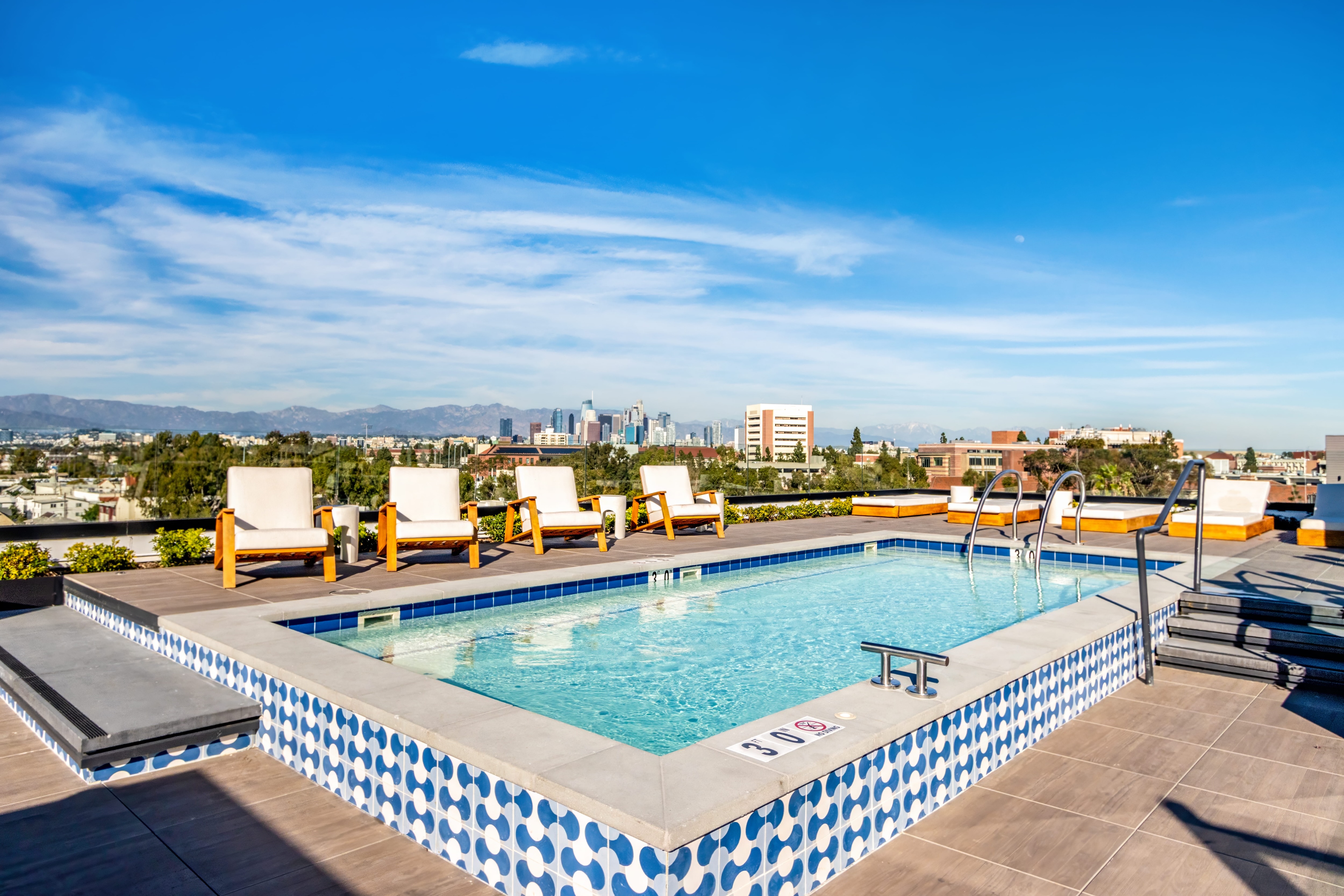
Tessera USC is a purpose-built student housing community one block from USC's Exposition Boulevard entrance, directly adjacent to the Expo/Vermont Metro station and within the USC DPS patrol zone. Explore Tessera's neighborhood to see what's within walking distance, from the Natural History Museum to the soon-to-open Lucas Museum of Narrative Art. The building offers studio through four-bedroom floor plans, all with individual leases, fully furnished units, and amenities included in rent: high-speed internet, a 24-hour fitness center, private study lounges on multiple floors, and an 11,000-square-foot rooftop deck with a resort-style pool and fire pits.
For graduate students, the combination of individual leases and private bedroom configurations across all floor plan types means you can choose the right unit size without being locked into a joint lease with strangers. Studios and one-bedrooms offer complete privacy. Multi-bedroom floor plans with individual leases work for students arriving with cohort members or willing to share a well-designed space independently. You can review current availability and schedule a tour through the Tessera contact page.
Ready to Find Your Place at USC?
Graduate student availability at Tessera USC fills quickly each year. Browse floor plans, check current pricing, and book a tour at Tessera.